Blog

  • #SaveYourInternet

    #SaveYourInternet

    The #SaveYourInternet fight against Article 13 continues and needs our involvement. Please visit saveyourinternet.eu, raise your voice and act against Article 13. Contact your members of European parliament and government via email or Twitter and let them know what you think.

    On 12 September 2018, all 751 Members of the European Parliament (MEPs) got a chance to shape the European copyright reform with a plenary vote.

    The outcome: 366 MEPs blatantly ignored your calls asking them to #SaveYourInternet, as they adopted the copyright #CensorshipMachine.

    What’s next: The JURI Committee Rapporteur, MEP Axel Voss, has been granted a mandate to start informal negations with the representatives of the EU Member States (Council) and the European Commission (EC), so-called ‘trilogue negotiations’, the black box in the EU policymaking process. See EDRi’s explainer for more details on the remainder of this process.

    Article 13 only benefits big businesses

    Due to the collateral damage created by the vague and overly broad wording of Article 13, only big platforms and powerful rightholders will benefit from its adoption, to the detriment of all other stakeholders. 

    Bad for Users

    Users will have access to less content and will be unable to share their content with others, even when it’s legal. Moreover, any complaint mechanisms will be easily bypassed if blocking is done under the pretense of a terms and conditions violation, rather than as a result of a specific copyright claim.

    Bad for Creators

    If platforms become directly liable for user uploaded content they will arbitrarily remove content based on their terms and conditions. As a result, many creators will see their content get blocked too. And, as less platforms survive the burden of this provision, creators will have less choice on where to share their creations.

    Bad for competition

    Only platforms with deep pockets will be able to comply with the Article 13 requirements and even if small enterprises get an exemption from its scope, this simply means they are not allowed to scale up and compete with the big US platforms, under the motto ‘in Europe, small is beautiful’!

    More info on saveyourinternet.eu.
  • Carna Botnet

    Carna Botnet

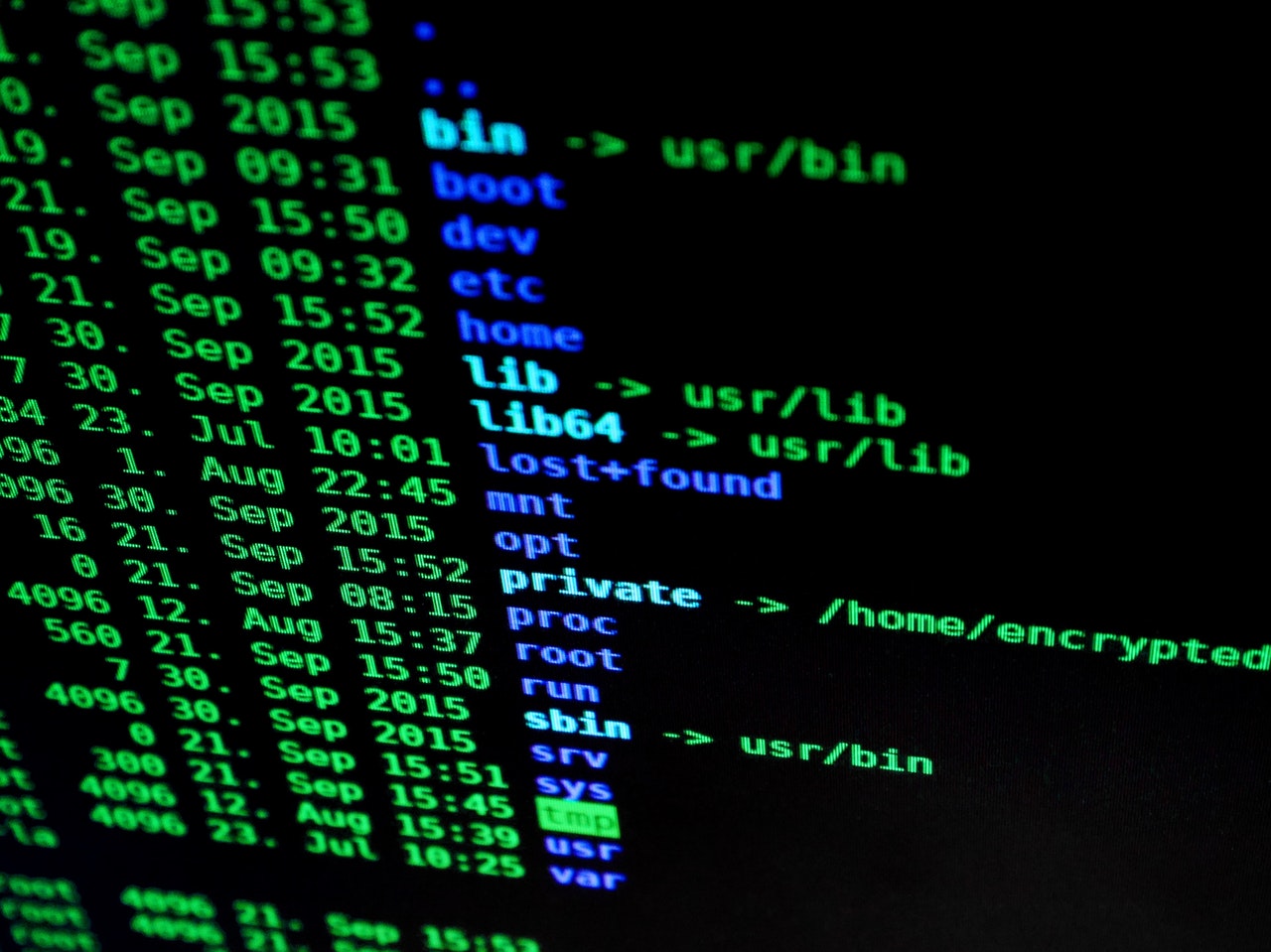
    Recently, I discovered Darknet Diaries, an amazing podcast produced by Jack Rhysider, covering true stories from the dark side of the Internet. Stories about hackers, defenders, threats, malware, botnets, breaches, and privacy.

    Episode #13

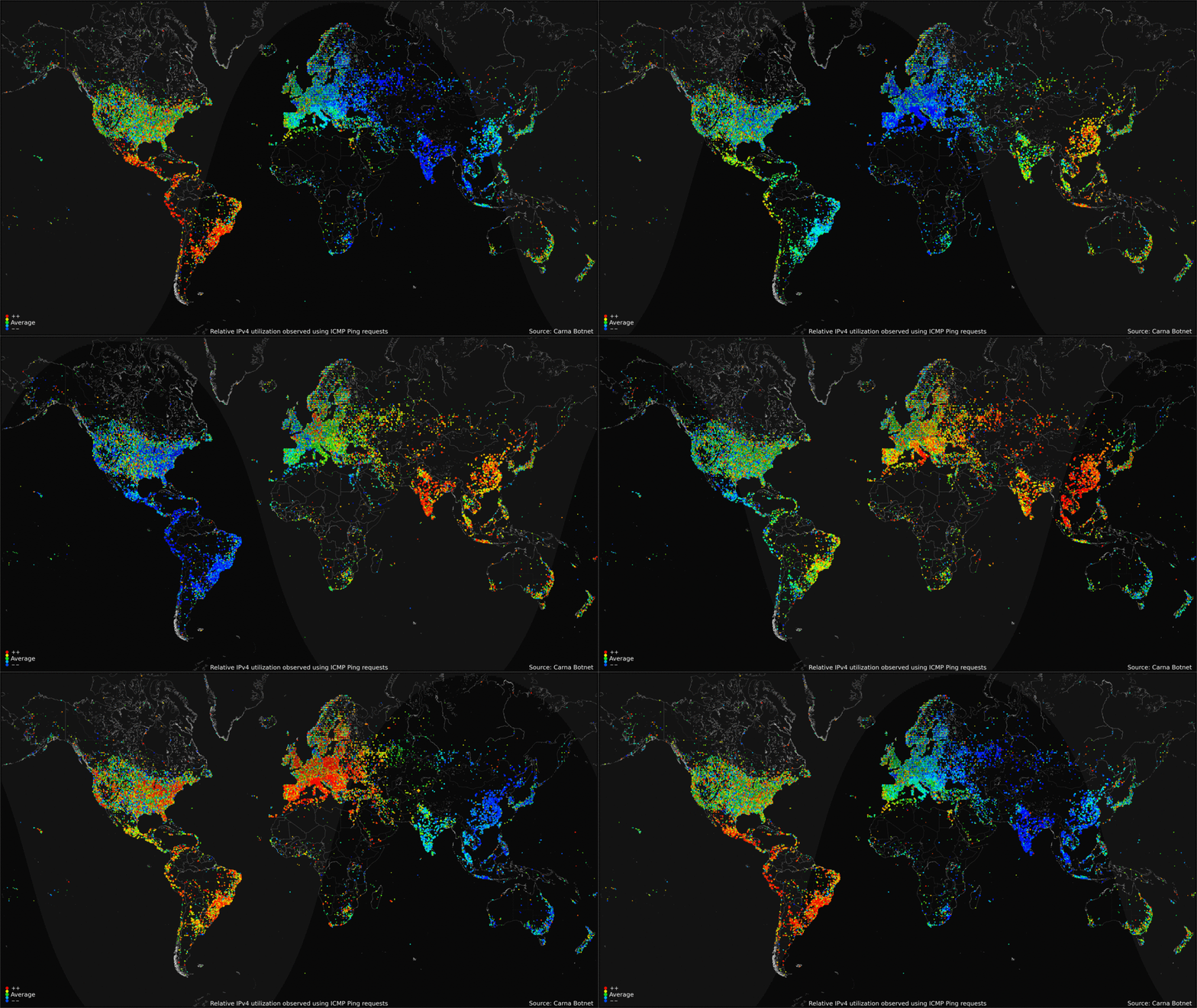
    In 2012 the Carna botnet was built and unleashed on the world. But it didn’t have any intentions on doing anything malicious. It was built just to help us all understand the Internet better. This botnet used the oldest security vulnerability in the book. And the data that came out of it was amazing and looks like this on a map. You might have to click and enlarge image to see the animation.

    Relative IPv4 utilization observed using ICMP Ping requests

    The Carna botnet was used to scan the internet to create a map of where all the public facing computer are in the world.

    You can listen to the podcast on Apple Podcasts, Google Podcasts, Spotify or YouTube.

  • Twenty Nineteen

    Twenty Nineteen

    A couple of days ago I enabled nightly builds on this blog to be able to test out WordPress 5.0 with the new Twenty Nineteen theme prior to its official release, which is supposed to be happening sometime today. Just in time for WordCamp US which starts tomorrow. I hope the State of the Word keynote by WordPress co-founder Matt Mullenweg will be streamed online. It will take place on Saturday, December 8 at 4:00 pm Nashville time, which should be 11:00 pm Zürich time if I’m not mistaken.

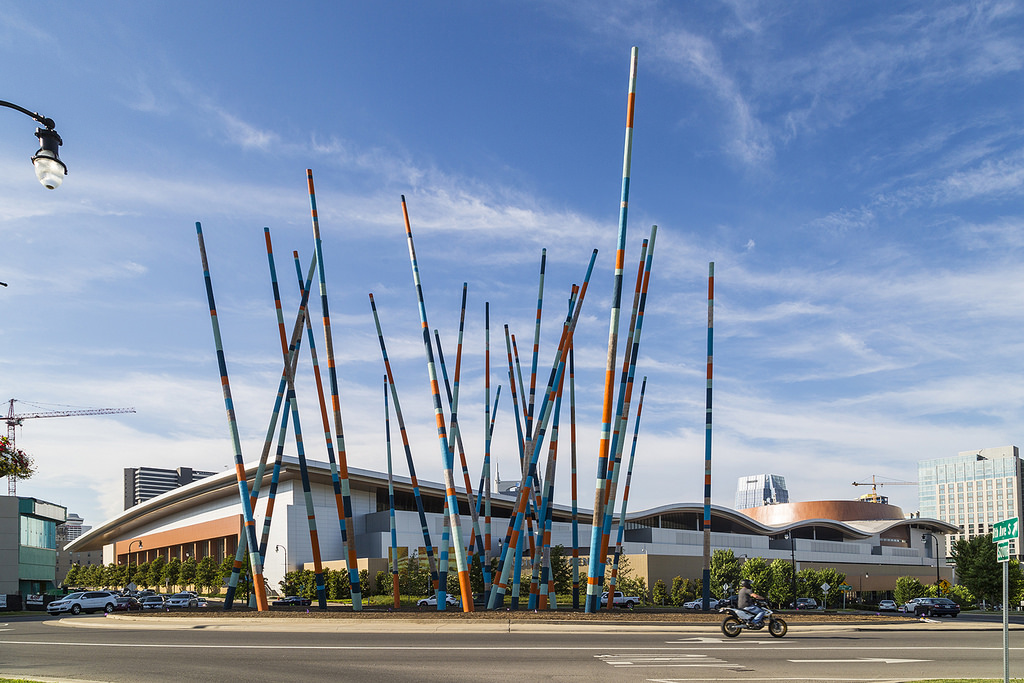
    Naishville Music City Center – Picture courtesy of Mary Clippard

    I never attended WordCamp US before and also skipped WordCamp Europe this year, but I’m already looking forward to attending WordCamp Europe 2019 which will be taking place in Berlin. I already have my ticket.

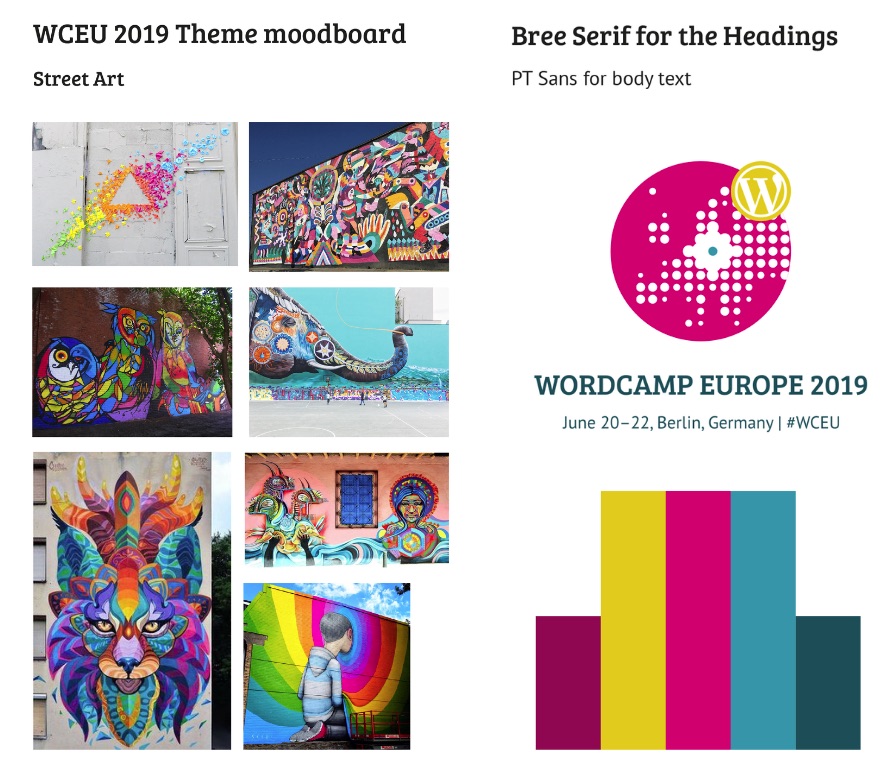
    WordCamp Europe 2019 Theme Moodboard

    Today, I updated the de_CH (Deutsch/Schweiz) translation for Twenty Nineteen from de_DE (Deutsch/Deutschland), so for the informal version, the translation is now at 100% which means that you should see all text strings on this site which are part of the theme in German. Sort of funny that I’m writing this in English, but this blog is bilingual and I mainly choose the language based on the type of content I’m writing. And also depending on the current mood.

    I already found one («Leave a comment») that is not being translated, but maybe I just have to wait a little longer for the next autoupdate to kick in and download the latest de_CH language pack for me.

    I really like the new Gutenberg-enabled Twenty Nineteen theme, especially the blog post detail page with the full page background image. The header with the social media icons is also very pretty, although I haven’t found out yet how to add the commas after each main menu item.

    How do you like Twenty Nineteen? Are you using a theme that will add Gutenberg support anytime soon?